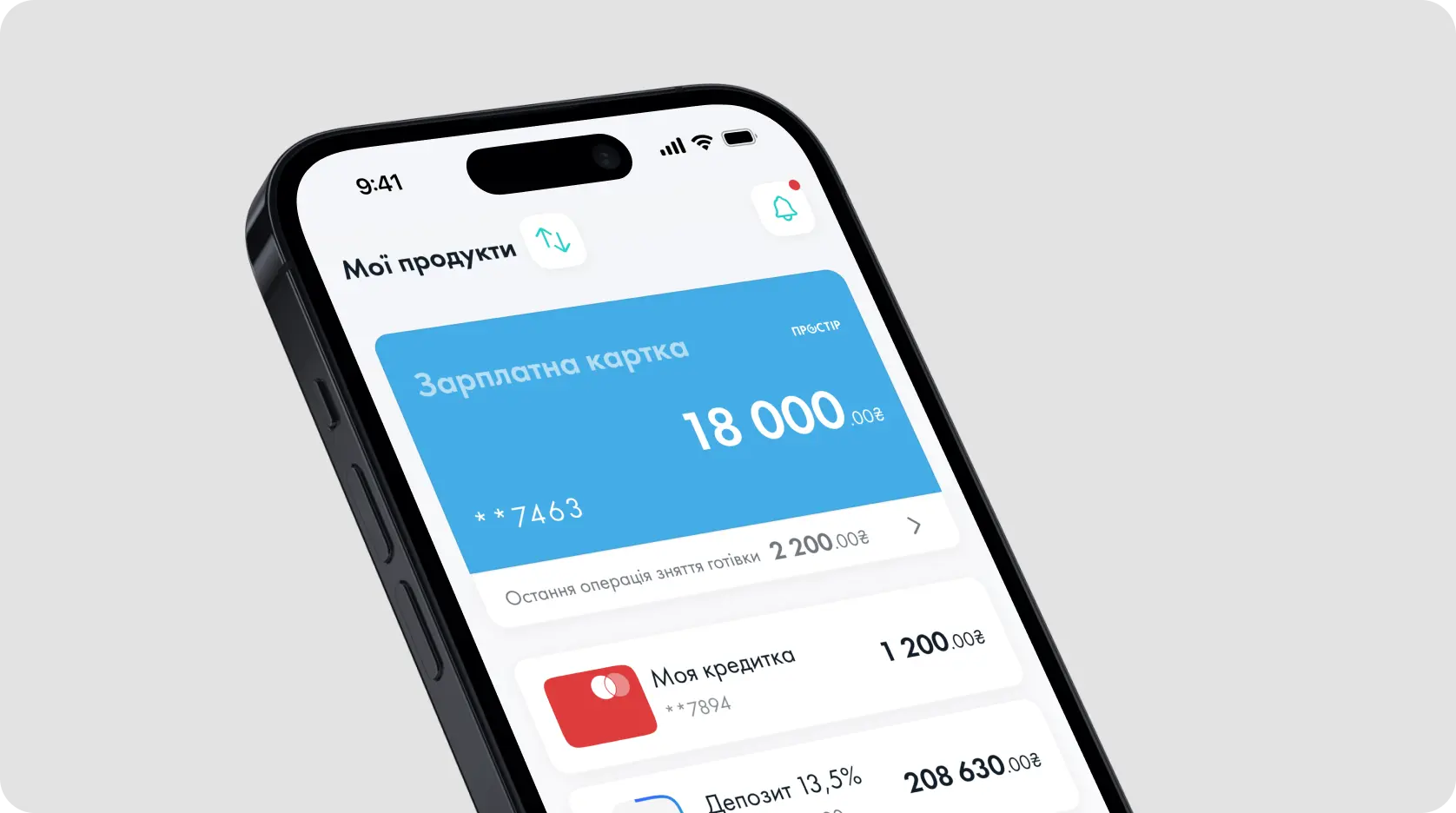
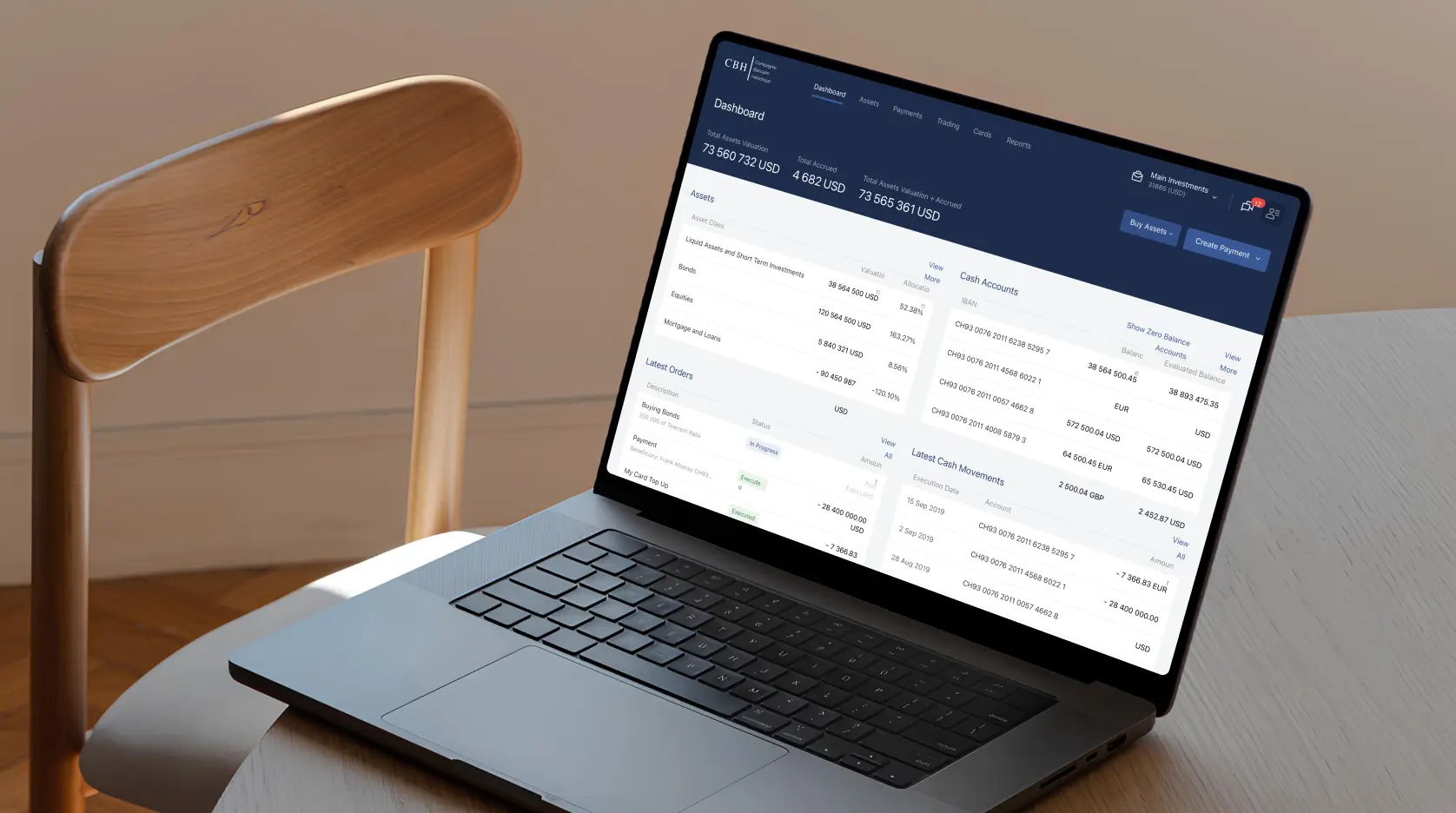
Monobank launched in 2017 with an ambition to build a fully digital bank in a market shaped by post-crisis distrust and branch-centric banking. Alty helped define the experience architecture behind a mobile-first banking model that later scaled to more than 8 million users.

App rating. Sustained user satisfaction at scale, Confirmed that clarity-driven design translated into long-term behavioral trust

4.9
Active users. Demonstrated that mobile-only banking could achieve mass adoption without branch infrastructure.

>8M
Competitive displacement of traditional branch-centric banks. Proved structural viability of a digital-first retail banking model.

Market Leadership Position
About the Client
Monobank is Ukraine’s leading neobank, launched in 2017 to disrupt a market dominated by traditional, branch-centric banks
At the time of launch, customer trust in banks was low, service expectations were shaped by bureaucracy and inefficiency, and mobile apps often replicated legacy processes rather than improving them.
Market conditions were increasingly favourable for a mobile-first alternative: users were fatigued by poor service, ready to adopt digital-first models, and open to banks that could combine transparency, speed, and reliability. Monobank entered the market at this inflection point, with a clear ambition to redefine everyday banking.
The Challenge
The challenge was not adding features.
It was defining a digital banking model customers could understand, trust, and use daily
Failure would not only slow adoption – it would invalidate the digital-only operating model. Without early trust formation, customer acquisition costs would rise, regulatory scrutiny would intensify, and the absence of branch infrastructure would become a structural liability rather than an advantage.
Monobank did not face a typical “app design” problem. It faced a structural market question:
Could a bank operate entirely through a mobile interface in a trust-constrained environment?
At the time:
Traditional banks relied heavily on branches
Mobile apps were secondary and often poorly structured
Customers associated banking with paperwork, queues, and opaque processes
Launching as a digital-only bank introduced significant risk:
No physical reassurance layer
No legacy trust cushion
No fallback to branch-based service
If the mobile experience failed to establish clarity and confidence immediately, adoption would stall.
What interaction model builds trust without physical presence?
How can digital onboarding feel immediate but secure?
How should a mobile-only bank structure everyday banking without branch logic?
How should financial products be presented to reduce friction rather than increase cognitive load?
Objective
Alty joined Monobank at a critical model-definition stage, leading the experience architecture and defining the interaction logic required to operationalize a mobile-only banking system under trust-sensitive conditions.
The work focused on structural decisions rather than visual redesign.
1. Mobile as the Primary Operating Model
Rather than replicating traditional banking interfaces, the product was structured around everyday financial behavior:
Card-first logic
Clear transaction visibility
Immediate feedback loops
Transparent limits and balances

Insight
Users associated banking complexity with institutional opacity and risk.
Decision
Core interactions were reorganized around a card-first, real-time transaction model.

Business effect
Reduced cognitive friction and accelerated habit formation, reinforcing mobile as the primary banking surface.
This eliminated branch-derived navigation logic embedded in traditional banking apps.
2. Simplicity as a Trust Mechanism
In a market shaped by institutional distrust, clarity became a strategic instrument. Instead of layering advanced features at launch, the product emphasized:
Predictable flows
Minimal cognitive overload
Immediate confirmation of actions
Visible control over finances
Insight
In a post-crisis environment, perceived clarity directly influenced perceived safety.
Decision
Feature expansion was intentionally constrained at launch in favor of predictable flows and visible financial control.
Business effect
Trust formation became embedded in interaction design rather than dependent on physical reassurance.
Simplicity was not aesthetic. It was structural risk mitigation.
3. Digital Onboarding Without Friction
Account opening and activation were engineered to minimize delay while preserving regulatory compliance.
The objective was behavioral: shorten the gap between curiosity and first meaningful use.
Insight
The longer the gap between intent and activation, the higher the abandonment risk in a digital-only model.
Decision
Decision
Onboarding was streamlined to compress time-to-first-use without compromising compliance integrity.
Business effect
Reduced acquisition leakage at the most fragile stage of the customer journey.
The Results
Large-scale validation of a fully digital banking model in a trust-constrained market
Sustained user satisfaction at scale. Confirmed that clarity-driven design translated into long-term behavioral trust
4.9
Active users. Demonstrated that mobile-only banking could achieve mass adoption without branch infrastructure.
>8M
Competitive displacement of traditional branch-centric banks. Proved structural viability of a digital-first retail banking model.
Market Leadership Position
“
We have been collaborating with the Alty team since 2010 and firmly believe they are the best in the market. Their unmatched expertise was the primary reason we chose them to design Monobank back in 2017.
Misha Rogalskiy, Co-founder at The Credit Thing and Monobank
Key Takeaways
01
Digital trust is earned through simplicity, not feature volume
02
User-centric design can reset expectations in even the most traditional markets
03
Viral growth emerges when everyday banking feels effortless and human
04
Neobanks scale faster when mobile is the primary, not secondary, channel